
Care for your Natural Hair
At NDALATOU, we believe every coil, curl, and kink tells a story. Caring for natural hair isn’t about “taming”—it’s about nurturing, embracing, and thriving
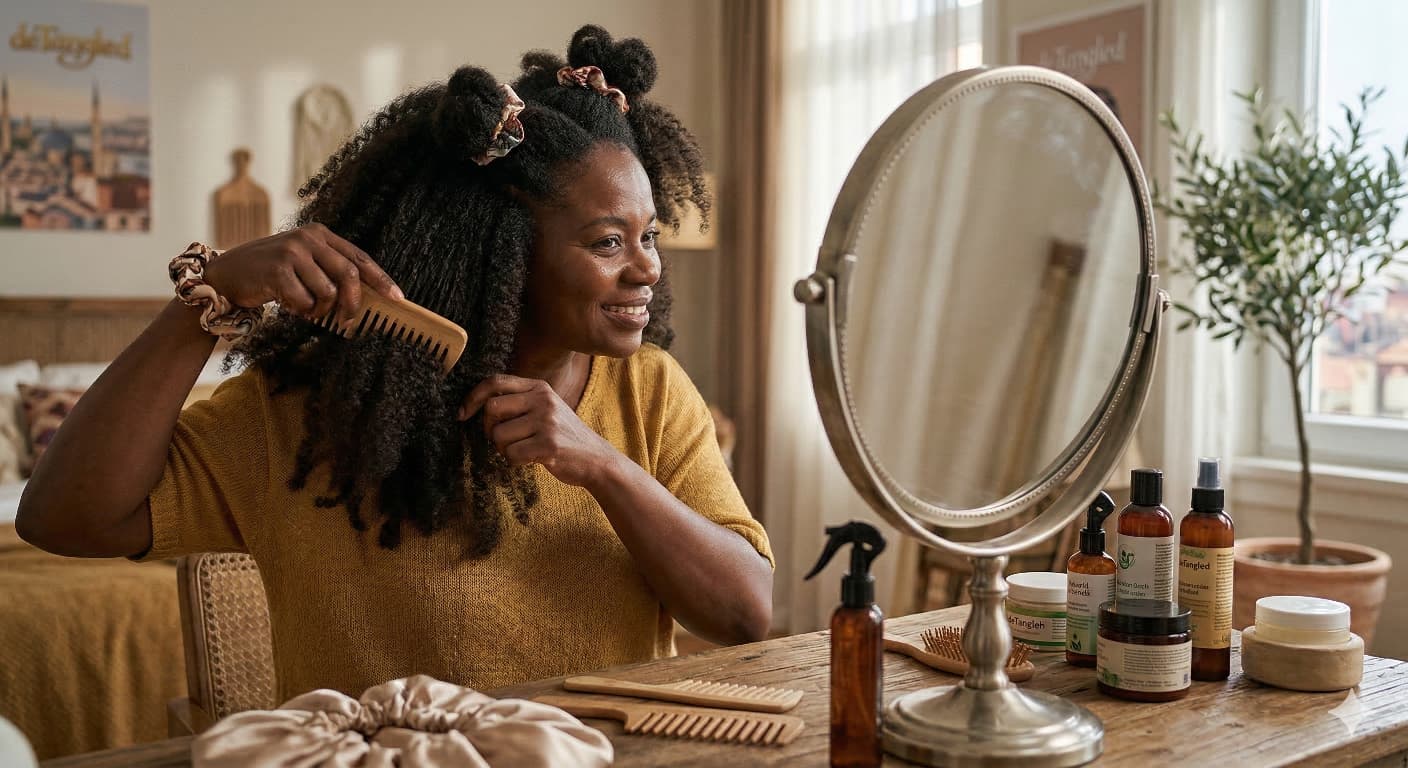
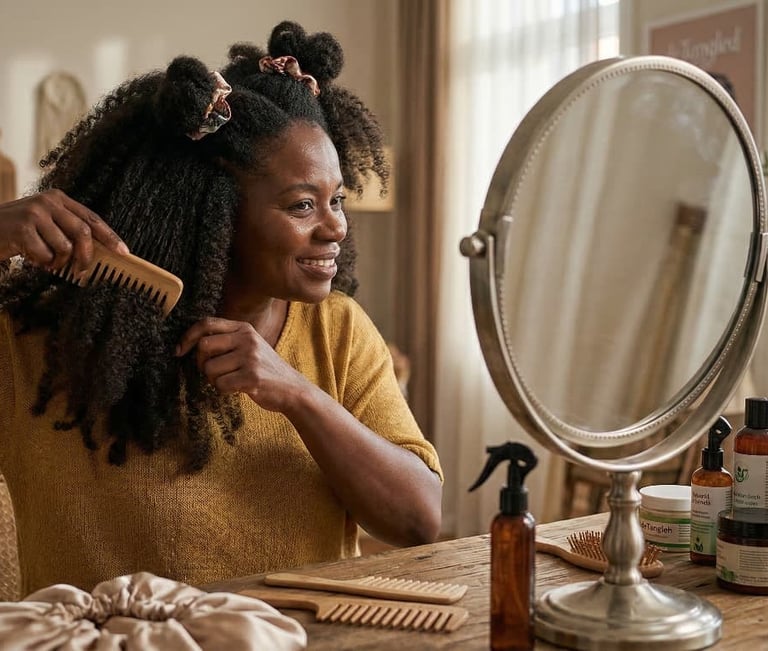
Caring for natural coily and curly hair can be a rewarding journey, celebrating the unique textures and beauty of your hair while maintaining its health. This detailed guide aims to provide you with comprehensive insights and practical advice on caring for your coily and curly hair, from cleansing to styling, ensuring your hair not only looks great but feels great too.
Understanding Your Hair Type
Before diving into hair care routines, it's essential to familiarize yourself with the basics of natural hair. Coily hair tends to have a tight curl patterns, which can range from type 4A to type 4C. Curly hair (type 3) on the other hand has a looser pattern, but both types need moisture and care to prevent dryness and breakage. Recognizing your hair’s unique characteristics will help tailor your care regimen accordingly.
1. Cleansing
Shampooing
Natural hair requires gentle cleansing to maintain moisture balance. Choose a sulfate-free shampoo that won’t strip your hair of its natural oils. Aim to wash your hair every 7-14 days depending on your lifestyle and hair needs:
- Frequency: Avoid over-shampooing, which can lead to dryness.
- Technique: Apply shampoo primarily to your scalp; use just a small amount on the lengths of your hair. Massage your scalp with your fingertips in circular motions to lift dirt without causing tangles.
Co-Washing
Consider co-washing (using a conditioner to wash your hair) between shampoos to keep your curls hydrated:
- Conditioner Choice: Use a silicone-free conditioner that offers cleansing properties.
- Application: Apply generously, detangle with your fingers or a wide-tooth comb, and rinse thoroughly.
2. Conditioning
Deep Conditioning
Regular deep conditioning is essential for coily and curly hair as it helps restore moisture:
- Frequency: Deep condition once a week or bi-weekly, depending on your hair’s moisture needs.
- Products: Look for ingredients like shea butter, aloe vera, and coconut oil. Apply the product to damp hair and use a plastic cap for heat retention to help the conditioner penetrate deeper.
Leave-In Conditioner
Leave-in products are crucial for maintaining moisture throughout the week:
- Method: After washing and deep conditioning, apply a generous amount of leave-in conditioner to damp hair, ensuring even distribution.
- Benefits: A leave-in helps in detangling and provides additional moisture and curl definition.
3. Moisture Retention
Sealing
After applying your leave-in conditioner, sealing your hair is important to lock in moisture:
- Oils and Butters: Use natural oils like jojoba, olive, or argan oil, or butters like shea and mango.
- Application: Focus on the ends, as they are the oldest and most prone to dryness.
4. Detangling
Tools and Techniques
Taking care of tangles gently is crucial for preventing breakage:
- Best Tools: A wide-tooth comb or detangling brush works best for coily and curly hair.
- Wet vs. Dry: Always detangle when hair is damp and conditioned to minimize mechanical damage. Sectioning your hair makes the process easier; work through your hair in small parts to avoid causing stress.
5. Protection
Protective hairstyles can help retain length and protect your hair from environmental damages:
- Styles: Think braids, twists, buns, and updos. Aim for styles that keep the ends of your hair tucked away as much as possible.
- Duration: Wear protective styles for a couple of weeks, giving your hair a break and moisture boost between them.
6. Styling
Styling can enhance your natural curls while maintaining the health of your hair:
- Styling Products: Use curl creams, gels, and mousses designed to define and hold your curls without drying them out.
- Application Techniques: Apply styling products while your hair is still wet or damp to help form and set curls. Methods like the "shingling method" (smoothing product through hair with fingers) or the "praying hands method" (rubbing product between palms and smoothing over hair) are effective for curl definition.
7. Night Care
Nighttime routines can help preserve moisture and curl definition:
- Pineapple Method: Gather your hair loosely on top of your head (like a pineapple) to prevent frizz and tangles during sleep.
- Satin/Silk Accessories: Use pillowcases, bonnets, or scarves made from satin or silk. These materials reduce friction that can lead to breakage and frizz, helping your hair retain moisture.
8. Trim Regularly
Regular trims keep your hair looking healthy and prevent split ends:
- Frequency: Aim for a trim every 8-12 weeks.
- Signs for a Trim: If your ends feel dry, splitting, or you notice excessive tangling, it’s time for a trim.
9. Nutrition and Hydration
Healthy hair starts from within:
- Diet: Consume a balanced diet rich in vitamins and minerals, focusing on foods high in Omega-3 fatty acids, proteins, and vitamins A, C, D, and E.
- Hydration: Drink plenty of water to keep your hair and scalp hydrated, as this impacts the overall health of your hair.
Bonus Tips
- Experiment with Products: Every hair type is unique; don't hesitate to try different products to find what suits your hair best.
- Listen to Your Hair: Pay attention to how your hair responds to products and routines—this will guide your hair care decisions.
- Stay Informed: The world of natural hair care continuously evolves, so stay informed about new techniques and products that could benefit your hair.
By understanding and adopting these practices for your coily and curly hair, you can enjoy vibrant, healthy hair that truly represents your unique beauty. With patience and a little dedication, you can form a loving relationship with your natural hair that highlights its beauty while ensuring its health.
Brand
Follow us on social media for more!
Contact US
© 2026. All rights reserved.
FOUNDER / ABOUT
Useful Links
LEARN
BLOG
HAIRSTYLES