
Curly Hair
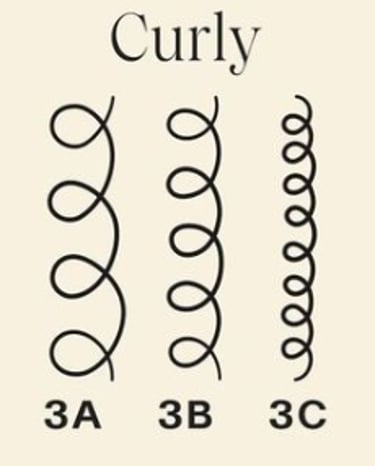
Curly or Type 3 hair (encompassing 3a, 3b, and 3c), is characterized by its distinct curl pattern that ranges from loose, well-defined curls to tightly coiled ringlets. Let’s break it down further:
Type 3A
Type 3a hair features loose, large curls that are typically soft and shiny. The curls bounce easily and can have a bit of wave in them, often looking like soft spirals or S-shapes. The diameter of the curls is about the size of a piece of chalk, which gives it a voluminous appearance. This type usually has a fine to medium texture but can also vary among individuals. Type 3a often has a moderate density, meaning it holds volume without looking too thick or overwhelming.
This type is relatively easy to style, requiring less product than tighter curl types. Light gels, mousses, or creams can be used to enhance curl definition and maintain moisture.
Type 3B
Type 3b hair features tighter curls that resemble a corkscrew shape. These curls tend to be denser, springy, and can vary from medium to coarse in texture. The curls are often more voluminous and less uniform compared to 3a, with a more defined spiral. This type of hair has a higher density than 3a, leading to a fuller appearance.
Styling products for Type 3b typically include creams and gels based on personal preference for hold and definition. This type benefits from moisture-rich products to prevent frizz and maintain curl integrity.
Type 3C
Type 3c hair is characterized by tight, dense curls that can be described as very curly. The curls have a diameter similar to a straw and are closer together, creating a lush, voluminous appearance. This hair type tends to be the densest within the Type 3 category. 3c hair is usually coarser and thicker compared to its Type 3 counterparts, giving it more resilience but also requiring more moisture to prevent dryness.
This hair type requires substantial moisture and is best styled with curling creams and oils to lock in hydration and enhance curl definition.
Common Characteristics of Type 3 Hair
- Volume: Type 3 hair tends to have significant volume due to the curling pattern, which naturally lifts from the scalp.
- Frizz: This hair type is often prone to frizz, particularly in humid conditions. Proper moisturizing techniques are essential to maintaining healthy curls.
- Shrinkage: Many people with Type 3 hair experience shrinkage, where the hair appears shorter when dry compared to when wet. This is a natural characteristic of curly hair.
Care Routine for Type 3 Curly Hair
Taking care of Type 3 curls involves a dedicated routine focused on hydration and gentle handling. Here’s a detailed care routine that can be beneficial:
1. Cleansing: Use sulfate-free shampoos or co-washing products to cleanse the scalp without stripping natural oils. Sulfates can be overly harsh on curly hair, leading to dryness.
- Frequency: Consider washing hair every 5-7 days, as curly hair does not require daily cleansing. Overwashing can lead to loss of essential moisture.
2. Conditioning: Opt for moisturizing conditioners that can penetrate the hair shaft. Leave-in conditioners can also be beneficial for Type 3 curls, helping to detangle and hydrate.
- Deep Conditioning: Incorporate deep conditioning treatments at least once a week to replenish moisture and nourish the curls.
3. Moisturizing: Keep curls hydrated with curl creams and oils that best suit your hair type. Using the LOC method (Liquid, Oil, Cream) can be effective for locking in moisture.
4. Detangling: Use a wide-tooth comb or your fingers to detangle while your hair is wet and coated with conditioner. This prevents breakage and helps maintain the curl pattern.
- Best Practices: Always detangle from ends to roots and be gentle to avoid causing damage.
5. Styling: Experiment with a variety of styling products like gels, curl enhancers, and creams to determine what gives you the best curl definition and hold without weighing down your hair.
- Techniques: Techniques such as the ‘plopping’ method or ‘shingling’ can help enhance curls without frizz. Plopping involves wrapping hair in a T-shirt or microfiber towel after applying product to enhance curl formation.
6. Drying: Consider air drying or diffuse-drying to set the curls without creating frizz. Avoid towel-drying with rough materials; instead, use a cotton shirt or microfiber towel that won’t disrupt the curl pattern.
- Heat Protection: If using heat tools, always apply a heat protectant to shield the hair from damage.
7. Night Routine: To prevent frizz and preserve curls while sleeping, consider using a satin or silk pillowcase or a hair wrap. Pineappling, or loosely gathering curls on top of the head, can also help preserve curl definition overnight.
Brand
Follow us on social media for more!
Contact US
© 2026. All rights reserved.
FOUNDER / ABOUT
Useful Links
LEARN
BLOG
HAIRSTYLES